
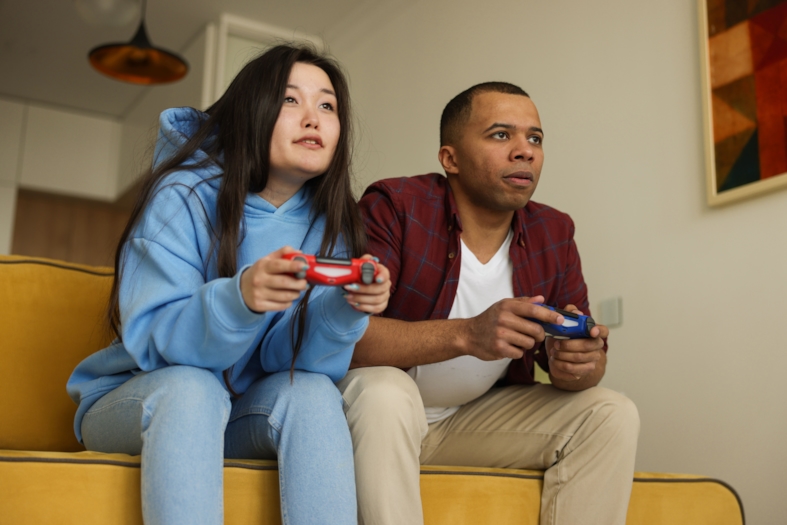
The claim that gaming improves real-life communication sounds counterintuitive to anyone who has heard the stereotype of the antisocial gamer in a darkened room. But cooperative and competitive gaming have been developing specific, transferable communication skills for decades - skills that translate directly into better relationships, better teamwork, and more confident social interaction.
Callout Communication: Clarity Under Pressure
Competitive gaming develops the skill of communicating critical information clearly, briefly, and at the right moment. "Enemy pushing B, two remaining, rotating right" is a model of efficient information transfer that contains everything necessary in the minimum words at the moment it is useful. This skill - brevity, specificity, timing - is directly valuable in any high-pressure communication context.
In relationship terms, this transfers as the ability to communicate what is needed when it is needed rather than either over-explaining or under-communicating. People who have played competitive games with good teams often develop an instinct for what information is actually essential and what is background noise, which makes their relationship communication more efficient and less prone to overloading difficult conversations with unnecessary detail.
Active Listening: The Co-op Requirement
Cooperative gaming requires genuine active listening - processing what your teammates are communicating in real time and responding to it appropriately. The player who does not listen to callouts, who misses the strategy change mid-fight, or who ignores the support's call for retreat fails the team. This creates a real, immediate consequence for poor listening that develops listening attention as a reflexive skill.
The active listening trained by co-op gaming is specifically the listening that notices what people are actually saying rather than waiting for a gap to say your own thing - a form of listening that is important in relationships and genuinely developed by gaming.
Non-Blaming Communication: Team Dynamics
Good team gaming communication specifically trains non-blaming framing. "Rotating left - we lost position here" is how information is communicated in well-functioning teams; "you failed to rotate and lost us position" is how it is communicated in dysfunctional ones. Players who have learned from good team environments have often internalised the non-blaming model as both more effective and more sustainable.
This directly transfers into relationship communication. Framing conflict as "this situation has produced this outcome, here's what I need" rather than "you did this thing and caused this problem" is exactly the communication pattern that functional team gaming environments train as a matter of competitive necessity.
Managing Disagreement: Strategy Debates
Gaming teams regularly disagree about strategy, approach, and priorities - and functional teams develop the ability to have these disagreements without personal conflict, make a decision and commit to it even when not everyone agrees, and revise based on outcomes rather than doubling down on failed approaches.
This is a directly valuable model for relationship disagreement. The gaming-trained instinct to debate the approach rather than attack the person, to make a committed decision and try it, and to revise based on evidence rather than ego is exactly the conflict resolution orientation that relationships benefit from.
Community Communication: Scale and Diversity
Online gaming communities expose people to a far wider range of communicative backgrounds and social contexts than most people encounter in daily life. Gaming with people from different countries, cultures, age groups, and communication styles - often simultaneously - develops genuine communicative flexibility: the ability to calibrate your communication style to different people and contexts.
This communicative flexibility is an underappreciated social skill. The person who has navigated international raid groups, guild politics, and PvP opponent interactions has developed social experience across a broader range than most offline contexts provide.
Digital Communication Proficiency
Much of modern social and professional communication happens in digital formats - text, voice, video, asynchronous messaging. Gaming develops genuine proficiency in all of these from an early age, in high-stakes contexts (competitive games, guild coordination, event planning) that require effective digital communication rather than just casual use.
The person who has coordinated twenty-four-person raid logistics across Discord, managed guild drama via text, and called competitive games via voice has developed real digital communication competence that transfers directly into professional and social contexts.
Frequently Asked Questions
-
Does gaming actually improve communication skills?
Specifically and yes. Co-op and competitive gaming develop callout communication (brevity, specificity, timing), active listening (processing information in real time), non-blaming framing (team-oriented conflict communication), strategy debate skills (disagreement without personal conflict), and digital communication proficiency across text, voice, and video formats. These are directly transferable to relationships and professional contexts.
-
Are gamers good at communicating in relationships?
Gamers who have developed their communication in good co-op and competitive environments often bring genuine communication strengths to relationships: clarity, brevity, active listening, non-blaming framing. Gamers whose communication has developed in toxic gaming environments may have developed different patterns. The gaming context shapes communication habits in real ways in both directions.
-
How can gaming communication skills help in relationships?
Directly: the callout skill transfers as communicating important information clearly at the right moment; active listening transfers as genuine responsive listening; non-blaming team communication transfers as productive conflict framing; strategy debate skills transfer as productive disagreement without personal attack; digital communication proficiency transfers across all forms of relationship communication.