
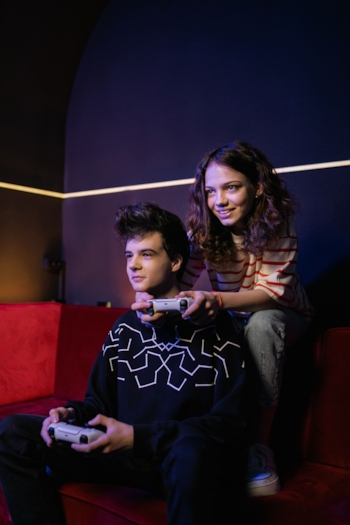
There is a persistent stereotype that gaming and serious relationships are incompatible - that someone who spends significant time in virtual worlds is somehow less present, less capable of intimacy, or less equipped for the demands of real partnership. This is wrong, and it is worth examining why, because the skills gaming actually develops are among the most useful a romantic partner can have.
Persistence in the Face of Failure
Every meaningful game requires players to fail repeatedly before they succeed. Dark Souls players die hundreds of times learning a boss. Rocket League players lose game after game improving their mechanics. Even casual games like Stardew Valley require players to try different approaches across multiple in-game years before their farm runs the way they imagined. This sustained engagement with failure - not giving up, adapting the approach, trying again - is one of the most useful dispositions a person can bring to a long-term relationship.
Relationships involve failure. Misunderstandings, arguments, periods of disconnection, choices that turn out to be wrong - these are not exceptional in a healthy long-term partnership, they are normal. The question is whether both people can treat these as learning experiences to move through rather than evidence that the relationship is failing. Gamers have practised exactly this response across thousands of hours of play.
Strategic Thinking and Problem-Solving
Gaming - across genres - develops analytical thinking. Strategy game players manage complex multi-variable systems. RPG players plan character builds weeks in advance. Even competitive FPS players are constantly making rapid tactical assessments, adapting to new information, and communicating plans under pressure. These skills transfer directly into the practical problem-solving that long-term relationships require: how to handle conflicting schedules, navigate a shared budget, make decisions that serve both people fairly.
What gaming specifically develops is the ability to approach problems with a systematic mindset rather than an emotional reaction. The question "what is the actual problem here and what are the available approaches to it?" is both a good gaming instinct and a good relationship instinct. Gamers tend to reach for problem-solving when things go wrong rather than spiralling - a quality that reduces the drama and increases the productive resolution of conflict.
Community and Loyalty
Gaming communities are built on genuine loyalty - to guilds, to raid groups, to co-op partners, to the games themselves. Players who have spent years in an MMO guild or maintained a regular Dungeons & Dragons group have demonstrated a commitment to community that most people never develop. They have shown up consistently for other people over time, maintained communication, and supported their group through both successes and failures.
This community orientation translates directly into relationship orientation. A person who has been a reliable guild member for three years - who showed up on raid nights, helped newer members, resolved internal conflicts maturely - has demonstrated almost every quality that makes someone a good long-term partner. The context is different; the underlying disposition is the same.
Emotional Depth and Storytelling
The games that attract the largest and most dedicated communities are almost always the ones with the richest stories - Final Fantasy XIV, The Witcher 3, Baldur's Gate 3, The Last of Us, Mass Effect. Players who invest deeply in these games have engaged with narratives about love, loss, sacrifice, moral complexity, and human connection at a level that many other forms of entertainment simply do not require. They have formed genuine emotional bonds with fictional characters and experienced genuine grief when those stories end.
That emotional engagement is not something to condescend toward - it is evidence of emotional range and openness. Someone who cried at the end of The Last of Us, who stayed up past midnight because they were too invested in Shadowbringers to stop, who replayed Mass Effect twice to explore different relationship paths, is someone with a rich emotional life and a genuine capacity for feeling. Those are excellent qualities in a partner.
Patience and Long-Term Investment
Games reward patience in a way that almost no other entertainment format does. A crafting system that takes weeks to master, a story that only reveals its significance in the final hours, a competitive skill floor that requires months of consistent practice - these are experiences that train genuine patience. Gaming is one of the few leisure activities that consistently requires people to invest significant time before they see returns, and that teaches them to find the investment itself rewarding.
In relationships, patience is essential and underrated. Being with someone who can wait - who does not need everything resolved immediately, who can sustain interest and investment through periods of slower development - is a significant asset. Gamers have practised this patience not as a discipline but as a natural part of how they engage with the things they enjoy.
The Actual Case
The case for dating a gamer is not that gaming is virtuous or that gamers are perfect. It is that the specific things gaming develops - persistence, problem-solving, community loyalty, emotional depth, patience - are exactly the things that make someone a good long-term partner. The person who is willing to spend a hundred hours mastering a difficult game is usually also the person who is willing to put in the sustained effort that a real relationship requires.
On Gamers Dating, these qualities are the baseline - every person on the platform has demonstrated the kind of genuine investment and community orientation that gaming develops. Finding someone who shares your gaming interests is not just a compatibility bonus; it is often a proxy for finding someone who thinks and engages with the world in ways that make for excellent partnership.
Frequently Asked Questions
-
Are gamers actually good at relationships?
Gaming develops persistence, problem-solving, community loyalty, and emotional depth - all of which are directly useful in relationships. Gamers who invest seriously in games tend to apply the same sustained engagement to the people they care about. The stereotype that gaming and serious relationships are incompatible is not supported by the actual skills that gaming develops.
-
What makes a gamer a good partner?
The qualities that make someone good at gaming - patience, persistence through difficulty, problem-solving, genuine investment in communities - are exactly the qualities that make someone a good long-term partner. Gaming also tends to develop emotional depth through narrative engagement and community loyalty through sustained group play.
-
Where can I meet gamers who want serious relationships?
Gamers Dating is built specifically for gaming singles looking for genuine romantic connection. Every member on the platform is already a gamer, which means the shared interest is a given rather than a lucky match - conversations start from genuine common ground, and the profile structure makes gaming interests a core part of how people present themselves.