
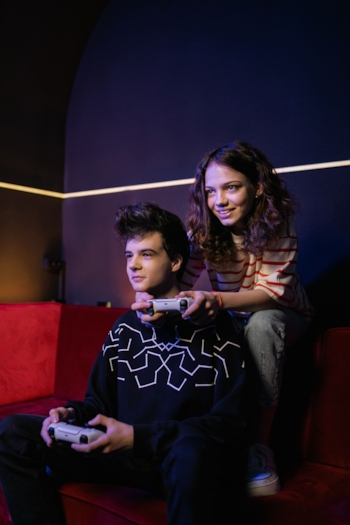
Gaming Isn't Just a Hobby - It's a Lifestyle
Before anything else, understand this: for most gamers, games aren't a way to kill time. Gaming is how they relax, socialise, create, compete, and decompress. It's the same as someone who lives for live music, marathons, or cookery - the hobby is woven into their identity.
The biggest mistake non-gamers make when dating a gamer is treating gaming as something to be tolerated rather than appreciated. When you come in with that energy, your partner picks up on it immediately. And nothing shuts down communication faster than feeling judged for something you love.
Flip the script. Treat gaming with the same respect you'd want for your own hobbies, and watch the relationship open up.
How to Show Genuine Interest (Even If You Don't Game)
You don't need to become a pro player to impress a gamer. You need to be curious. A few things that go a long way:
- Ask them to show you a game they love. Sit with them, watch, ask questions. Don't just scroll your phone in the background.
- Learn a few names. Knowing the difference between Zelda and Fortnite signals effort. It shows you've been listening.
- Celebrate their milestones. They beat a boss they've been stuck on for two weeks? That's genuinely worth celebrating. Match their energy.
- Try a casual game together. Animal Crossing, Stardew Valley, and Mario Kart have converted millions of non-gamers. Low stakes, high fun.
None of this requires you to invest 40 hours a week. It requires interest - and interest is free.
Respecting Gaming Time: The Scheduling Conversation
One of the most common friction points in gamer relationships is unscheduled gaming sessions running into couple time. The fix isn't less gaming - it's better communication.
Have the conversation early and without accusation: "I want to make sure we have quality time together. How do we make that work alongside your gaming schedule?" Most gamers respond incredibly well to this because it's not an ultimatum - it's a collaborative plan.
Practical approaches that actually work:
- Block out specific nights or windows as "couple time" - non-negotiable.
- Agree that long gaming sessions (tournaments, raid nights) get flagged in advance.
- Be flexible when they're in the middle of something time-sensitive - they'll remember you were cool about it.
The goal is mutual respect, not restriction. Gamers who feel controlled tend to resent it; gamers who feel respected tend to prioritise their partner naturally.
Gaming Language and Culture: Things Worth Knowing
You don't need a glossary, but a few things are worth knowing so you don't accidentally say something that lands wrong.
Gaming can be intensely social. Online friends made through gaming are real friends - sometimes closer than people they see every day. Don't dismiss these relationships or compete with them.
Losing can feel genuinely frustrating. If your partner loses a match, that's not the moment to suggest they "just stop playing then." Give them five minutes to decompress the same way you'd want space after a stressful work call.
And please: never call gaming a "waste of time." That phrase ends more gamer relationships than anything else. It signals that you fundamentally don't respect how they spend their time - and from there, things tend to go downhill fast.
Common Mistakes to Avoid
- The "just one more game" resentment trap. If you don't communicate expectations, you'll build silent resentment. Talk early, talk often.
- Competing with gaming. "Do you love your games more than me?" is never a good look. Gaming isn't competition for affection - it's a separate thing entirely.
- Expecting them to quit once the relationship gets serious. Gamers don't retire from gaming when they fall in love. That's not the deal.
- Pretending to be interested when you're not. Gamers tend to be pattern-recognition sharp. Fake interest is easily spotted and quietly noted.
The Upside: Why Gamers Are Incredible Partners
Here's what gets overlooked in every "how to date a gamer" article written by non-gamers: gamers are brilliant partners. They're problem-solvers. They're persistent - they'll die on the same boss 30 times and keep going. They understand teamwork, strategy, and that good things take time. They're loyal to their squad, and when you're their person, you become part of that squad.
Gaming also gives couples a shared activity that's genuinely fun and endlessly varied. Co-op games build teamwork. Competitive games create friendly rivalry. Story-driven games spark deep conversations. There's something in gaming for every kind of couple - you just have to find it.
Frequently Asked Questions
-
What do gamers look for in a partner?
Gamers typically look for a partner who respects their hobby and doesn't make them feel guilty for gaming. They value genuine curiosity - even from a non-gamer - and someone who can share in the excitement of their milestones. Loyalty, humour, and the ability to just chill together rank highly.
-
How do I connect with a gamer if I don't play video games?
You don't need to be a gamer to connect. Ask them to show you a game they love and genuinely engage with it. Learn a few games by name. Pick up a casual co-op title like Stardew Valley or Mario Kart you can play together. The effort matters more than the skill level.
-
Is it a red flag if a gamer plays every day?
Not necessarily. Daily gaming is normal for many people - it's a hobby like going to the gym or reading. The question is whether gaming crowds out quality time together. If you feel consistently deprioritised, that's worth a calm conversation about boundaries - not a verdict on gaming itself.