
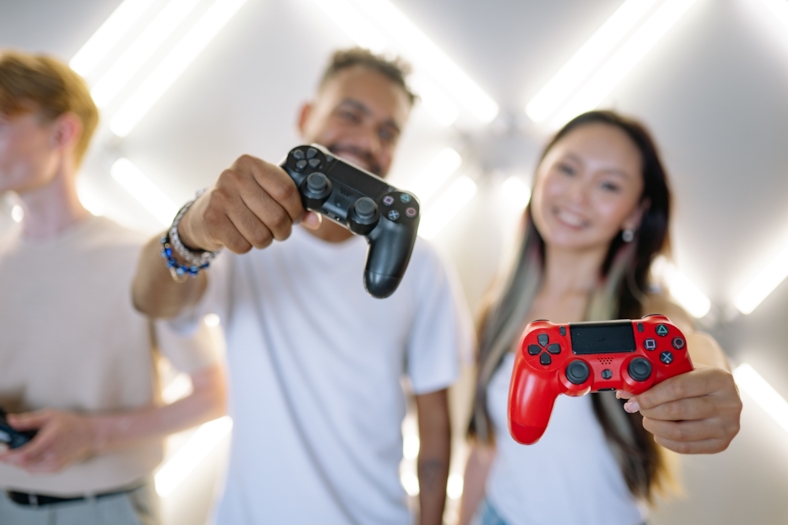
Gaming develops specific communication skills and also creates specific communication challenges in relationships. The same vocabulary and problem-solving orientation that makes gamers effective in cooperative play can be directly applied to relationship communication - and the specific conversations that gaming raises (time, priorities, schedules, emotional regulation) have their own dynamics worth understanding.
Apply Gaming Communication Principles to Relationships
The best cooperative gaming communication is clear, timely, and non-blaming. "Enemy coming from the right" is better than "watch out" because it is specific. "I need help with this mechanic" is better than struggling silently. "That was my mistake, let me adjust" is better than deflecting. These principles translate directly into relationship communication.
Specificity matters. "I felt disconnected from you this week" is more useful than "you have been distant." Timing matters - raising something in the moment it is relevant rather than letting it accumulate into a larger grievance mirrors the in-game instinct to call out information immediately rather than after the round has been lost. Non-blaming framing reduces defensive responses the same way it does in a team gaming context.
The Gaming Time Conversation
The gaming time conversation is one that most gamer-involved couples have and many handle poorly. The reasons it goes badly: it tends to happen when one person is already frustrated and has been accumulating resentment, which makes the tone adversarial from the start; the gamer partner tends to feel defensive about their legitimate hobby; the conversation rarely results in a clear, specific, mutually agreed structure.
The better approach is to have this conversation proactively - before it becomes a problem - and to treat it as scheduling negotiation rather than value judgment. "How much gaming time per week feels right to you, and what do you need from our schedule to feel connected to me?" is a better framing than any conversation that starts with "I feel like you game too much."
After-Session Emotional Regulation
Returning from an intense gaming session - particularly a competitive one with emotional stakes - and immediately engaging with relationship communication is not ideal for either person. The post-game emotional state (whether elated, frustrated, or somewhere in between) affects communication quality in real and predictable ways.
Developing a transition routine - a brief period between gaming and full relationship presence, whether it is a physical movement, a drink, a few minutes of quiet - is a small structural change with significant communication benefits. It is not emotional distance; it is the gaming equivalent of not discussing serious work matters the moment someone arrives home from a difficult shift.
Communicating When One Partner Does Not Game
When one partner games and the other does not, the communication challenge is translating gaming experiences into language that has genuine meaning for the non-gaming partner. "I had a really good raid tonight" is not inherently meaningful to a non-gamer; "I spent the evening working with a team of people to beat something genuinely difficult that we had been trying for weeks" probably is.
The translation effort is worth making because it allows a non-gaming partner to genuinely share in the emotional experience of gaming rather than feeling permanently excluded from something important to you. A partner who understands what a raid achievement means is more likely to respect raid night; a partner for whom gaming is an opaque activity that takes you away from them is more likely to resent it.
Navigating Gaming Community Relationships
Gaming involves relationships with other people - guildmates, co-op partners, streaming communities, Discord friends. For partners who do not game, these relationships can feel opaque and occasionally threatening. Being transparent about who you play with and what those relationships look like - treating them as the legitimate friendships they are rather than something separate from your relationship - prevents the ambiguity that creates jealousy and suspicion.
The conversation about opposite-gender gaming friendships in particular is one worth having explicitly rather than leaving to assumption. Most gaming friendships are exactly what they appear to be; the ones that are more complicated are worth being honest about.
Using Gaming as a Relationship Repair Tool
When a relationship is in a period of tension or disconnection, gaming together can sometimes be an effective reconnection tool - particularly for gaming couples where shared play is a natural language of togetherness. The activity removes the face-to-face intensity of a direct conversation about the relationship issue while still creating genuine shared presence and contact.
This is not avoidance - it is the recognition that sometimes the most effective way back into genuine connection is through a shared activity rather than a direct discussion. Gaming together does not resolve the underlying issue, but it can restore the baseline of warmth and connection that makes the actual conversation more productive.
Frequently Asked Questions
-
How do gaming couples handle conflict differently?
Gaming couples who apply gaming communication principles to relationship communication - clarity, timeliness, non-blaming specificity, collaborative problem-solving orientation - tend to handle conflict more effectively than those who do not. The shared vocabulary and problem-solving orientation that good cooperative gaming builds are directly applicable to relationship communication.
-
How should I talk to my gaming partner about feeling neglected?
Raise it proactively rather than after resentment has built, frame it as a scheduling and connection need rather than a criticism of gaming, be specific about what would make you feel more connected, and approach it as collaborative problem-solving. "I miss spending evenings with you and I'd love to figure out a schedule that gives us more regular couple time" is more productive than "you game too much."
-
Is it normal to feel jealous of a partner's gaming friends?
The feeling is understandable, particularly when gaming involves sustained close communication with people you do not know well. The most effective response is asking your partner to be transparent about who they game with and what those relationships look like, and paying attention to whether the feeling is about the specific relationships or about feeling generally disconnected from your partner's gaming life.