
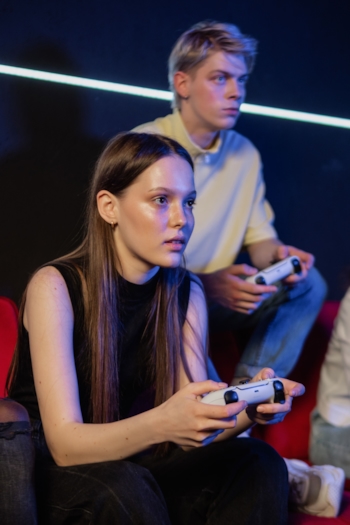
The relationship between gaming and mental health is genuinely complex - not the simple positive or negative story that either gaming advocates or gaming critics tend to tell. Gaming provides real mental health benefits for many people: stress relief, community, competence, creative outlet. It also has real risks: avoidance patterns, anxiety amplification, community toxicity, and the substitution of gaming for engagement with real-world difficulties. Understanding which role gaming plays in your own mental health - and communicating honestly about it with a partner - is important for both your wellbeing and your relationship.
The Genuine Mental Health Benefits of Gaming
Research consistently identifies gaming as an effective stress relief mechanism for many people - the cognitive absorption of gaming interrupts rumination cycles that sustain anxiety and depression. The sense of competence from mastering a game, completing a challenge, or achieving a rare item provides genuine self-efficacy reinforcement. Gaming communities provide real social connection, particularly for people who find face-to-face socialisation difficult.
For many gamers, particularly those who experience social anxiety, gaming provides a low-stakes social environment where connection is mediated through shared activity rather than the direct social exposure that can feel overwhelming. This is a genuine benefit, not a lesser substitute for "real" socialisation - the friendships formed in gaming communities are real friendships with real value.
When Gaming Becomes an Avoidance Mechanism
The most important mental health risk in gaming is avoidance - using gaming to avoid engaging with difficult emotions, challenging life situations, or relationship conflicts that would benefit from direct engagement. This is not unique to gaming; any absorbing activity can be used this way. But gaming's particular effectiveness at providing complete cognitive absorption makes it especially efficient as an avoidance mechanism, which makes the risk worth understanding specifically.
Signs that gaming has shifted from stress relief to avoidance: gaming consistently extends until the problem being avoided goes to sleep; returning to the avoided issue consistently produces a strong urge to game rather than engage; gaming is the first and primary response to any emotional difficulty rather than one among several coping strategies.
Communication With Your Partner About Gaming and Mental Health
If gaming is playing an important role in your mental health management - as stress relief, as social connection, as one of your primary ways of recovering from difficult days - being honest with your partner about this is important. A partner who understands "when I am stressed, gaming is genuinely how I decompress, and preventing me from doing it makes things worse" can support you appropriately. A partner who interprets gaming purely as avoidance or preference will experience that gaming differently.
This conversation can be vulnerable because it requires admitting that gaming is doing some emotional work for you, not just providing entertainment. But it creates a much more informed and compassionate partner response than the alternative of leaving the gaming's function unexplained.
Supporting a Partner Who Uses Gaming as Coping
If your partner uses gaming as a primary coping mechanism, the most supportive response is understanding what the gaming is doing rather than assessing whether the amount of gaming is appropriate. Gaming that is doing genuine mental health work - providing recovery from a stressful day, social connection for someone who struggles with socialisation, competence reinforcement during a difficult period - is different from gaming as pure preference or avoidance.
The conversation worth having is not "you game too much" but "I want to understand what gaming does for you and whether there are things I can do to support you that would also meet some of those needs." This opens a dialogue about mental health and coping strategies that is more useful than a conversation about gaming time alone.
Gaming Community and Mental Health in Relationships
Gaming communities are a significant source of social support for many gamers, particularly those for whom face-to-face social connection is difficult. For partners who do not understand gaming communities, the depth and significance of these relationships can be invisible - the partner who is sustained by their guild relationships, Discord community, or long-term co-op friends has a real social support network that matters to their mental health.
Partners who acknowledge and respect these community connections rather than treating them as lesser than face-to-face friendships are providing something genuinely important. The reverse - consistently minimising the importance of gaming community relationships - can create real isolation even in relationships where the gaming itself is accepted.
When to Seek Professional Support
Gaming-related mental health concerns that warrant professional support: gaming that has increased significantly during a difficult life period and has not returned to baseline after that period resolved; gaming that is explicitly named by both the individual and people close to them as a way of avoiding a specific issue that has been avoided for an extended period; significant distress about gaming patterns that self-awareness and relationship conversation have not been able to change.
Gaming disorder - the clinical diagnosis in both DSM-5-TR and ICD-11 - is a genuine but rare condition, affecting an estimated 1-3% of gamers. Most gaming, even high-frequency gaming, does not meet diagnostic criteria. But the broader pattern of gaming as avoidance or the narrowing of life around gaming to the exclusion of other important domains is worth addressing with professional support when self-directed change has not worked.
Frequently Asked Questions
-
Is gaming good or bad for mental health?
Both, depending on context. Gaming provides genuine mental health benefits - stress relief, social connection, competence and self-efficacy, creative outlet - for most gamers. It also carries real risks - particularly as an avoidance mechanism and in the context of toxic gaming communities - for some people in some circumstances. The net effect depends heavily on which role gaming is playing in your life.
-
Should I tell my partner gaming helps my mental health?
Yes, if it is true. Understanding that your gaming is doing genuine mental health work - not just entertainment - changes how a partner can support you and helps them interpret your gaming time more accurately. This is vulnerable to share but creates much more informed partner responses than leaving the function of gaming unexplained.
-
How do I know if my gaming is avoidance?
Ask whether your gaming is consistently replacing engagement with something difficult rather than complementing a generally healthy life. If gaming is consistently the response to any difficult emotion and those emotions are not being addressed any other way, the avoidance pattern is likely present. If gaming is one among several ways you manage stress and you are generally engaging with your life, it is more likely functioning as stress relief.