
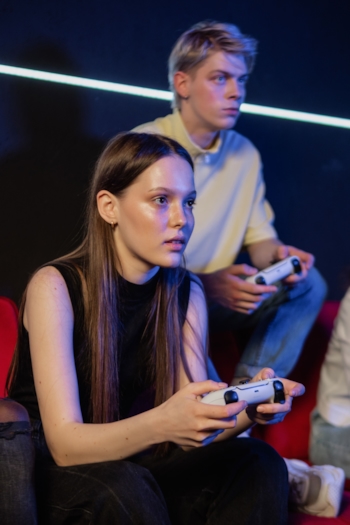
Gamer stereotypes have existed as long as gaming itself - the antisocial recluse, the socially inept man-child, the person who prioritises pixels over people. These stereotypes have been absorbed into dating culture in ways that create genuine friction for gaming singles. Here is what the evidence actually shows, versus what the stereotype claims.
Stereotype: Gamers Are Antisocial
The reality: gaming is one of the most social activities in the modern entertainment landscape. MMOs connect hundreds of thousands of players in complex social systems. Competitive gaming requires constant real-time communication. Discord communities sustain ongoing social relationships. Gaming events and conventions bring tens of thousands of people together around shared passion.
Gamers who primarily play online often have richer social networks than many non-gamers precisely because gaming creates natural community infrastructure - guilds, clans, communities, recurring shared activities. The antisocial stereotype reflects the image of someone gaming alone in a room; it misses that the room is connected to a world of other people.
Stereotype: Gamers Cannot Commit to Relationships
This stereotype conflates time investment in a hobby with inability to commit to a relationship - a logic that would equally condemn sports fans, gym-goers, or dedicated readers. Time investment in a hobby is not evidence of relationship avoidance; it is evidence of genuine passion for something.
The actual evidence on gaming and relationship commitment is straightforward: gamers have relationships, marriages, and long-term commitments at normal rates. The specific quality of commitment to gaming communities - guild loyalty, long-term co-op partnerships, sustained community investment - often reflects a capacity for commitment that carries directly into relationships.
Stereotype: Gaming Partners Are Neglectful
The neglectful gamer trope - the partner who misses anniversaries because of gaming, who cannot be reached during raids, who consistently prioritises games over the relationship - exists as a real phenomenon in some specific situations but is not representative of gaming partners generally. The specific situations where it is real tend to involve broader patterns of avoidance or poor relationship skills that gaming happens to be the vehicle for, not gaming itself as the cause.
Most gamers with healthy relationships have developed exactly the same balance that people with any significant hobby develop: they protect their gaming time, they protect couple time, and they communicate honestly about both. The gaming partner who is reliably present, communicative, and attentive when not gaming is the norm, not the exception.
Stereotype: Gamers Are Immature
Gaming is a hobby enjoyed seriously by adults across every demographic, profession, and life stage. Surgeons, academics, parents, and executives game seriously and without apology. The average age of a gamer is consistently in the early thirties and has been rising for years as the generation who grew up gaming has aged into adulthood without stopping.
The maturity stereotype also gets it backwards in one specific way: gaming develops genuine emotional and social skills - patience, strategic thinking, collaborative communication, resilience under failure - that are more associated with maturity than with immaturity. The gamer who has navigated guild politics, competitive tilt management, and sustained community relationships has been practising exactly the emotional and social competences that relationships require.
Stereotype: Female Gamers Are Rare or Fake
Women make up approximately half the gaming population worldwide, across mobile, console, and PC gaming. The stereotype that gaming is primarily male is factually incorrect and reflects the visibility of certain gaming genres and communities rather than the actual demographic reality.
The "fake gamer girl" stereotype - the idea that women who claim gaming interests are performing rather than genuine - is one of the most harmful and factually baseless gaming stereotypes. It results in gatekeeping behaviour that is both unpleasant and wrong. Female gamers are real gamers with the same range of interests, investment levels, and community connections as male gamers.
What Gamers Are Actually Like as Partners
The evidence from people in relationships with gamers is much more nuanced and positive than the stereotypes suggest. Qualities that gaming partners are consistently praised for: patience developed through difficult gaming content; communication skills developed through co-op gaming; reliability and follow-through developed through guild commitments; creativity developed through sandbox and narrative gaming; genuine enthusiasm and passion that extends beyond gaming into the relationship.
The challenges that gaming partners are consistently cited for are real: gaming time management, the difficulty of gaming schedule negotiation, and the learning curve for non-gaming partners in understanding gaming communities and commitments. These are genuine negotiation challenges, not character flaws. They are manageable with honest communication, which is what makes them different from the stereotype of an inherently flawed partner.
Frequently Asked Questions
Are gamers good partners?
Generally yes, and in ways that go beyond the stereotype in both directions. Gaming develops genuine relationship-valuable skills: patience, communication, collaborative problem-solving, community investment. The challenges (gaming time negotiation, schedule management) are real but manageable with honest communication. The research does not support the stereotype of gamers as inherently worse partners than non-gamers.
Do gamers neglect their partners?
Some do, in the same proportion as people with any other significant hobby or commitment. Gaming is neither uniquely likely nor uniquely unlikely to produce neglectful partners compared to other major time investments. The pattern of using gaming as an avoidance mechanism does exist in some relationships, but it is not representative of gaming relationships generally.
Are female gamers real?
Yes, completely and in large numbers. Women make up approximately half the global gaming population. The stereotype of gaming as primarily or overwhelmingly male is factually incorrect. Female gamers have the same range of interests, investment levels, and community connections as male gamers and do not require authentication of their gaming identity.