
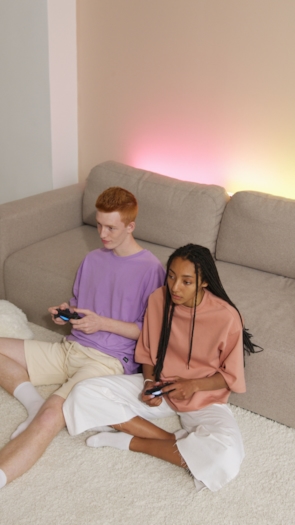
Gaming communities are one of the more age-diverse social contexts available - it is genuinely common to be in a raid group or Discord community where members span twenties through forties without anyone treating it as unusual. This age-diversity in gaming community creates an interesting context for romantic relationships that form within or around gaming, where age gaps that might feel more pronounced in other social contexts are often much less salient.
How Gaming Minimises Age as a Social Barrier
Online gaming anonymises many of the markers that make age visible in offline contexts. In text-based communication, the writing style and content matter more than the age of the writer. In voice communication, personality and communication style are more salient than age. In gameplay, skill and strategic thinking are more relevant than how long someone has been alive.
The result is that gaming communities often develop genuine relationships between people of different ages because the gaming context provides a connection that precedes any awareness of the age difference. The realisation of an age gap in a gaming relationship often comes after genuine mutual interest is established rather than before it.
Shared Gaming Generation vs Shared Life Stage
In age-gap gaming relationships, an important distinction is between shared gaming generation and shared life stage. Two people who grew up with different gaming eras have different gaming foundations - different formative games, different reference points, different relationships to gaming history. This generational difference in gaming can be either enriching (genuine mutual discovery of each other's gaming history) or occasionally alienating (references that do not land).
More practically significant is shared life stage: whether both people are in compatible life situations regardless of age. A 28-year-old and a 38-year-old who are both in established careers, living independently, and at similar relationship-readiness stages have a much more manageable relationship context than a 22-year-old and a 30-year-old who are at very different life stages despite a smaller age difference.
Gaming as Common Ground That Bridges Age
Gaming provides genuine common ground that can bridge age differences in ways that non-gaming relationships cannot as easily. A shared passion for FFXIV, a co-op relationship in a long-running MMO, years of shared gaming community experience - these create genuine connection that does not require similar age to sustain.
The shared experiences built through gaming together also create relationship history and common reference that reduces the weight of background differences. The fact that you have completed content together, navigated community situations together, and built something in a game world together constitutes genuine shared history regardless of what each person was doing before they met.
What Actually Predicts Success in Age-Gap Gaming Relationships
The factors that predict success in age-gap relationships generally - compatible values, compatible life stage, mutual genuine respect, similar relationship goals - apply equally in gaming contexts. The gaming dimension adds: compatible gaming investment levels and compatible gaming community expectations.
A significant mismatch in gaming investment level across an age gap can be more problematic than the age gap itself. The older partner who has dialled back gaming as career and family responsibilities have grown may be fundamentally incompatible with a younger partner whose peak gaming investment is now, regardless of how much they have in common otherwise.
Community Perception and Navigation
Gaming communities generally treat age gaps between adults as less remarkable than mainstream social contexts do - the focus on shared gaming identity tends to crowd out age-related social judgment. However, the specific gaming community context matters: smaller, tight-knit guilds or communities may have more visible opinions about member relationships than large anonymous multiplayer contexts.
Navigating a relationship that formed in a shared gaming community involves some of the same considerations as any relationship formed in a small social group (see: the TTRPG dating guide) regardless of age: awareness that community dynamics are affected by the relationship, and handling any difficulty with maturity for both people's sake.
Practical Considerations Specific to Gaming Couples
Different life stages create different gaming contexts that are worth discussing honestly. A partner with more established career and family responsibilities may game less frequently or in shorter sessions than a partner with more available time. Gaming schedules may be more different than expected initially.
Retro gaming appreciation and nostalgia also play differently across generations: a partner who grew up with NES and PlayStation 1 has a fundamentally different gaming nostalgia than one who grew up with Xbox 360 and modern gaming. This is not a barrier - cross-generational gaming discovery is often genuinely enriching - but it is a real difference in gaming cultural background that shapes references and conversation.
Frequently Asked Questions
Do age gaps matter less in gaming relationships?
Often yes, because gaming provides genuine shared identity and common ground that transcends age, gaming communities are already unusually age-diverse contexts where age is less socially salient, and the connection formed through gaming often precedes awareness of any age difference. The factors that actually predict success (compatible life stage, values, relationship goals) apply regardless of gaming context.
What is more important in gaming relationships - age or life stage?
Life stage. Compatible life stages - similar levels of life establishment, similar relationship readiness, similar goals for the coming years - predict relationship success better than similar age. Two people with very similar ages but very different life stages often face more fundamental compatibility challenges than two people with an age gap but compatible life situations.
How do gaming communities respond to age-gap relationships?
Generally with less social attention than mainstream contexts, because gaming communities focus on shared gaming identity over demographics. Tight-knit smaller communities (guilds, TTRPG groups) may be more visible about opinions on member relationships; large anonymous multiplayer contexts effectively have no community reaction. The focus on gaming compatibility tends to crowd out age-related social judgment.