
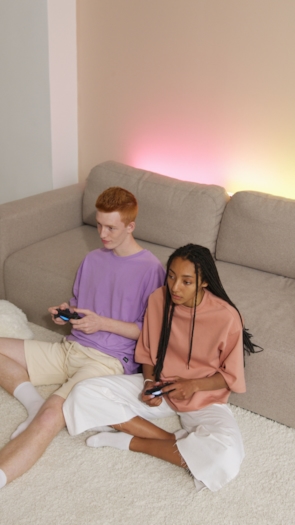
One of the most common relationship challenges for gamers is navigating the gap between how important gaming is to them and the fact that their partner does not share the interest. This is not primarily a problem of incompatibility - couples with different hobbies work perfectly well - but it does require genuine thought about how to make gaming feel like a part of your shared life rather than a source of distance.
Start With the Right Game
The single most important choice when introducing a partner to gaming is picking the right entry point. This means setting aside your current favourite games in favour of something genuinely accessible. Dark Souls is not the right introduction. Neither is your most-played MMO where you have years of invested knowledge they do not share. The right game is one with minimal mechanical barrier, immediate appeal, and a forgiving relationship with failure.
Some consistently successful entry points: It Takes Two (cooperative, excellent story, accessible); Stardew Valley (gentle pace, zero pressure); games from the Mario or Zelda series; cosy games like Animal Crossing or Unpacking; party games like Mario Kart or Jackbox Games. The goal of the introduction is not to find a game they will love immediately - it is to find something that makes the experience of gaming feel enjoyable rather than frustrating.
Teach Without Condescending
How you teach matters as much as what you teach. The most common mistake gamers make when introducing partners to games is moving too quickly through the learning stages and failing to notice when the other person is lost. What feels like "just the basics" to someone with hundreds of hours in a genre is genuinely complex to a newcomer.
The best approach is to explain each new mechanic as it arises rather than front-loading information, to watch your partner play rather than holding the controller, and to ask questions ("what do you think happens if you try this?") rather than giving answers. Celebrate every small success genuinely - not condescendingly, but with real enthusiasm for their progress. And if something is clearly not working or creating frustration, changing games immediately is always the right call.
Watch as Well as Play
Some people who do not play games are genuinely interested in watching them - particularly games with strong narratives or beautiful worlds. If your partner is engaged watching you play The Witcher 3 or a Zelda game, that shared experience can be genuinely connecting even without them holding a controller. Many couples enjoy a "watching" model where one person plays and the other is invested in the story and offers commentary.
This is a legitimate form of sharing gaming, not a consolation prize. Some of the best conversations couples have about games happen in the watching context - discussing character motivations, predicting story outcomes, noticing visual details together. Watching creates a shared reference and a shared language without requiring equal skill or experience.
Respect When It Is Not Their Thing
Not every non-gamer partner will come to love gaming, and accepting that reality is healthier than sustained campaigns to convert them. Some people simply do not enjoy games, and that is not a problem to solve - it is information to work with in building a relationship where different interests are respected.
If your partner tries gaming in good faith and concludes it is genuinely not for them, the right response is to appreciate the effort and drop the subject. A relationship where both people respect each other's independent interests is healthier than one where either person feels obligated to perform enthusiasm for something they do not actually enjoy. Your gaming is important to you; their right to not share it is equally important.
Make Space for Your Gaming Without Explanation
One of the subtler challenges in relationships where one partner games and the other does not is the gamer feeling like they need to constantly justify their gaming time. This dynamic - where gaming requires permission or explanation while other leisure activities do not - is worth addressing explicitly.
Gaming is a legitimate hobby that deserves the same respect as any other. If you spent several hours on a Saturday reading, watching films, gardening, or playing sport, you would not generally feel obligated to explain or apologise for that time. Gaming deserves the same treatment. The conversation about how much time is reasonable to spend on different hobbies is one every couple should have - but the outcome should be based on genuine equality, not a premise that gaming specifically requires defence.
Find the Gaming-Adjacent Interests
Even partners who genuinely do not enjoy playing games often have interests that overlap with gaming culture. Board games are genuinely enjoyable for many non-gamers. Tabletop RPGs like Dungeons & Dragons are accessible to people who would never touch a video game. Some enjoy gaming-adjacent media - the Arcane animation, gaming documentaries, esports events as spectacles.
Looking for these adjacent interests is not about getting your partner into gaming through the back door - it is about finding genuine shared territory that you both actually enjoy. A partner who loves strategy board games might never enjoy a video game but will genuinely share the strategic thinking you love about your gaming. That shared thinking is worth more than shared mechanics.
Frequently Asked Questions
-
Is it a problem if my partner does not game?
Not necessarily. Many successful long-term relationships involve partners with different hobbies, as long as each person's time and interests are genuinely respected. The challenge with gaming specifically is that it can take significant time, which requires thoughtful management of shared time in any partnership. Clear, respectful communication about how gaming time is balanced with couple and individual time matters more than whether both partners play.
-
What are the best games to introduce to a non-gamer?
It Takes Two, Stardew Valley, Animal Crossing, Mario Kart, and Jackbox party games are consistently good entry points because they are accessible, low-stakes, and immediately enjoyable. Avoid games that have steep learning curves, punishing difficulty, or require significant context from previous play to enjoy.
-
What if my partner watches me play but does not want to play themselves?
Watching is a completely valid form of engaging with gaming together. Many couples enjoy a shared experience of one person playing a narrative game while the other watches and participates in the story. This creates genuine shared reference and conversation without requiring equal gaming investment.